
My Path from CAD and DMS
to ERP Systems
A practical experience where technical detail meets enterprise processes
This article is not about choosing an ERP system. It is not about promoting or dismissing any specific solution. It is about my experience – about a path that caught my interest some time ago and continues to engage me today. A path that, for me, began quite naturally.
As a CAD developer and DMS implementer, I spent many years in a technical world of data, structures, bills of materials, and development-related processes. Moving toward ERP was therefore not a leap into the unknown, but a logical progression – an effort to understand company-wide processes in a broader context. How individual departments operate, how they depend on one another, and where unnecessary friction arises.
In this context, I began to focus more intensively on Odoo Enterprise. I was drawn to its modularity, openness, community, and the wide range of available learning resources. Documentation, tutorials, and open learning programs allowed me to explore the platform in depth, at my own pace, without being locked into a rigid ecosystem.
This was followed by a deep dive into the platform’s core configuration. Gradually, I became familiar with Bash, Python, and the overall system architecture. Naturally, one of the first areas that caught my attention was integration. The REST API works reliably and makes sense from a CAD integration perspective – connecting to external systems is realistic and technically clean. Along the way, I consumed tutorials, experimented, tested, and pushed my own boundaries forward day by day.
Meanwhile, I was already working as an ERP administrator in a Microsoft Dynamics environment, while also acting as an IT administrator. This gave me direct exposure to real business processes across the company – procurement, production planning and subcontracting, technological workflows, bills of materials, development project management, activity reporting, sales forecasting, KPI tracking, reporting, HR agendas, and approval workflows. Each of these areas became an opportunity to reflect on how processes could be made more efficient, simpler, and more transparent. The goal was never to replace an ERP system at all costs, but rather to build a vision of how things could evolve.
At a certain point, a practical opportunity arose – the legacy website had reached the end of its life and needed to be replaced quickly. Time was a critical factor.
If a company has access to robust infrastructure, fast storage, virtualization, and reliable security, an on-premise solution is often the natural choice. In our case, this option was not available. This led to questions about hosting, operating system selection, source code management, and operational responsibility. Alongside these considerations, a third path emerged – Odoo.sh.
A performance-scalable platform with built-in backups, production, testing, and development environments, GitHub integration, an administrative console, and system logs – all in one place and provided directly by the vendor. The decision was pragmatic. Instead of managing servers, I could focus on the system itself and on processes. At that moment, cost comparisons were not the primary concern.
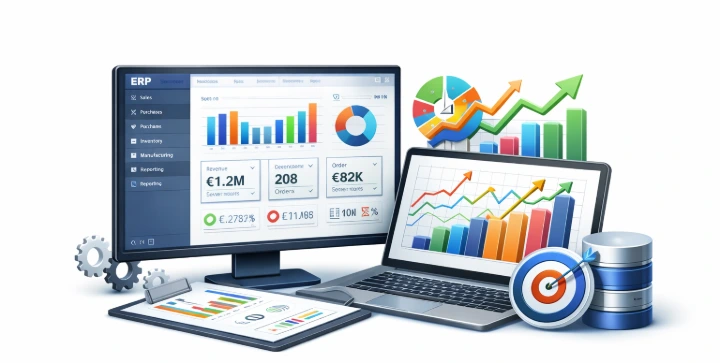
The foundation was built on a combination of Website, eCommerce, and Inventory modules. The website editor felt intuitive, allowing the homepage and initial product pages to be created quickly. While marketing colleagues worked on social media integrations, students on internships assisted with translations. We learned from each other. A partner zone, download portal, pricing structures, and ordering workflows were created. In the background, backup and restore procedures and a workflow between testing and production environments were in place. The entire transition was completed within one month.
It is important to note that this project did not run as an isolated task. It unfolded alongside everyday operations – in parallel with my work as an ERP administrator for Microsoft Dynamics and as an IT administrator. Odoo naturally became part of daily decision-making, prioritization, and problem-solving in a real business environment.
Later came my first custom Odoo add-on. I extended the Equipment module with additional fields and created custom reports for IT asset records and assignments. I explored the product configurator concept with links to bills of materials as preparation for manufacturing functionality. At the same time, I began preparing for CRM usage. Meanwhile, migrations to newer Odoo versions took place, along with e-shop adjustments, SEO improvements, and early experiments with AI in a chatbot.
Alongside this, an idea began to take shape – a smaller ecosystem, something like a club focused on ERP and CAD, custom products, add-ons, and collaboration between technical and marketing roles. I discussed this concept with the management of a technical high school, who would welcome such cooperation. At that time, however, other professional decisions took priority, and this vision remains open for the future. In the meantime, I continue to move Odoo forward on a smaller scale through micro-web projects such as chirosmedical.sk, fashionvictorystyle.com, or marravilla.com – where I configure the system, set direction, explain the concepts, and allow the project to operate independently.
This path is still ongoing for me. It is not defined by a single project or a single company. Rather, it represents a long-term way of thinking—one where discussion, sharing experiences, and learning from one another truly matter.
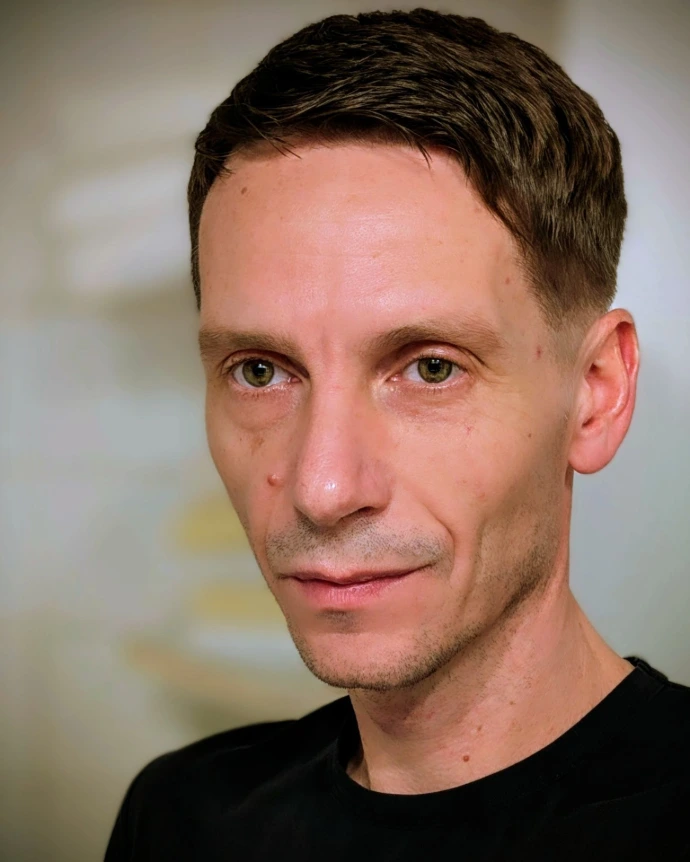
Ing. Ľuboš RODANIČ
Som technický architekt a vývojár so zameraním na CAD, DMS, ERP a systémové integrácie. Viac než 15 rokov sa pohybujem na priesečníku konštrukcie, dát a firemných procesov – od vývoja CAD doplnkov, cez DMS/PLM systémy, až po ERP, web a IT infraštruktúru.